
Brazil’s betting U-turn: Lula shuts down a market he helped create
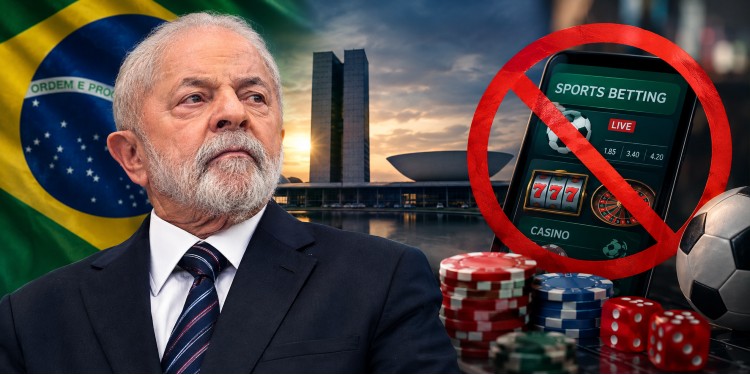
Brazil’s betting industry has spent the better part of a decade waiting for Brasília to decide what it wanted online gambling to be.
On September 25, President Luiz Inácio Lula da Silva finally delivered the answer. It was not another tightening of regulation, or a higher tax rate, or tougher responsible-gambling controls. It was complete prohibition.
Lula’s government has banned the exploitation, offering, intermediation and advertising of fixed betting throughout Brazil, both online and in physical environments. The measure covers sports betting and online casino-style games, and reaches state and Federal District authorisations as well as the federally licensed market.
The extraordinary part is the timing. Brazil’s regulated betting market only began operating on January 1, 2025 and it had been painstakingly constructed by the Lula administration itself.
From legalisation to prohibition in less than three years
Brazil’s original opening came under Law 13.756 in 2018, which legalised fixed-odds sports betting but left the sector largely unregulated. The decisive expansion came under Lula.
In 2023, Congress approved and Lula sanctioned Law 14.790, which established the modern framework for fixed-odds betting and, crucially, brought online games into the legal category. The law envisaged an authorised, competitive market supervised by the Ministry of Finance.
The implementation accelerated in 2024. The Ministry of Finance established the licensing framework, including a R$30 million (USD 5.7 million) authorisation fee, with each licence permitting an operator to run up to three brands fro a 5 year term. Companies that wanted to be operating from January 1, 2025 had to submit their initial applications by August 20, 2024.
The first successful licensees were published on December 30 2024. From January 1 2025 only companies authorised by the Ministry’s Secretariat of Prizes and Betting could legally operate nationally, with authorised sites using the .bet.br domain.
Then, just nine months into the regulated market’s second year, came the axe.
On September 25, 2026, Lula signed Provisional Measure 1.394. New betting activity was immediately prohibited. Existing operators were given a short wind-down period:
- players have until 11:59pm on October 5 to withdraw their balances voluntarily;
- sites and apps are scheduled to go offline from October 6;
- operators must report remaining balances to payment institutions on October 7-8;
- banks are to return the remaining money between October 9 and 14.
- licences themselves are extinguished after 30 days, meaning October 25.
Because it is a provisional measure this is not necessarily the end of the legal story. Congress has 120 days to convert the measure into permanent legislation.
A substantial regulated market
The scale of the experiment is worth remembering.
By September, Brazil had issued 85 authorisations, each carrying a R$30 million fee. That means operators had paid approximately R$2.55 billion in licence fees alone.
The market had also developed considerable economic weight. Ministry of Finance data obtained by Brazilian newspaper Folha show that authorised operators received R$220.6 billion in player deposits during 2025, with approximately R$36.9 billion representing players’ net losses — effectively operator revenue before costs and taxes.
Another useful measure comes from H2 Gambling Capital. Its September 2026 assessment put Brazil’s regulated market at approximately R$40 billion on an annualised basis immediately before the ban.
Industry-backed research produced somewhat different numbers because it uses gross gaming revenue rather than deposits. A 2025 LCA study commissioned by IBJR (Brazilian Institute of Responsible Gaming) estimated the legal market at roughly R$38 billion annualised, with the legal and illegal markets combined producing between R$64 billion and R$78 billion in annualised GGR.
The distinction matters. Deposits, betting turnover and GGR are not interchangeable measures of market size. But whichever metric one prefers, this was no longer a niche business. And it had become deeply embedded in Brazilian sport. Betting companies sponsored major football clubs, competitions and broadcasters, while advertising spread well beyond sport into entertainment and social media.
Why did Lula change course?
There is no single publicly demonstrated explanation, but three forces are visible.
The first is gambling-related harm. Lula has increasingly framed betting as a household-finance and public-health problem rather than a tax opportunity. At the September announcement he described gambling as a “cancer”, adding that “either we remove the tumour, or it kills us”, citing conversations with families affected by debt and suicide. The government has also presented figures suggesting rising treatment for pathological gambling and a substantial social cost.
The second is disappointment with regulation as a solution. The original political bargain was straightforward: bring betting into the light, identify operators, collect taxes, monitor transactions and impose responsible-gambling requirements. Yet illegal operators remained a major problem. The government says more than 60,000 illegal pages have been blocked since 2024.
The third is politics. The announcement came only nine days before Brazil’s October 4 presidential election. Reuters reported that the measure arrived alongside a major household debt-relief initiative, while polling cited by the agency indicated substantial public support for a ban.
That timing has inevitably generated political interpretations. The betting industry itself has suggested an electoral motive. Such claims should be treated as claims rather than established explanations: Lula has publicly offered gambling addiction, household debt and social harm as the rationale for his decision. He had also begun signalling a tougher position months before the ban, including in April and again during September.
The fascinating question for Brazil’s political economy is therefore not simply why Lula changed his mind. It is why his government concluded that the regulatory model it had constructed was no longer capable of containing the problems it was designed to solve.
The lawyers have already arrived
The legal fight is not hypothetical. It started within days.
Industry bodies ANJL (National Association of Games and Lotteries) and IBJR have gone to Brazil’s Supreme Federal Court seeking suspension of the prohibition. ANSEJA (National Association for Legal Security in Games and Betting) has also filed a direct constitutional action.
IBJR’s membership accounts for almost 75% or the regulated market, including companies like bet365, BetMGM, Betsson, Entain and Flutter.
The industry’s arguments attack the measure from several directions. One is legal certainty. Companies paid R$30 million for five-year authorisations under a framework created by Congress and implemented by the executive branch. The government now says those authorisations can be extinguished without refund or compensation.
Another is the constitutional requirement that a provisional measure involve urgency. ANSEJA argues that the government cannot simply use a presidential decree with immediate force to dismantle a regulatory regime that was created through legislation and had been operating for almost two years. It also raises questions involving free enterprise, the federal division of powers and the absence of an adequate financial-impact assessment.
There is an additional complication: some of these constitutional disputes predate the ban. The STF already has cases concerning the constitutionality of Brazil’s betting framework, including ADIs 7721, 7723 and 7749. The new prohibition has now been folded into that wider litigation.
The industry’s investment problem
For operators, the R$2.55 billion in licence fees is only the beginning.
ANJL estimates that the sector could lose approximately R$9 billion in planned investment through 2029, the point at which the original five-year licences would have expired. That estimate includes television advertising, influencers and sporting sponsorships.
Plínio Lemos Jorge, ANJL’s president, has been explicit about the industry’s intended legal strategy. He says any compensation claim could extend beyond the R$30 million licence fee to damages associated with investments made in Brazil and potentially lost profits.
The association’s position is that the licence represented payment for a five-year right to operate. The government’s position is almost the mirror image: the authorisations are being terminated for reasons of public interest and therefore create no entitlement to repayment, compensation for investments or lost profits.
That clash could ultimately be more important than the survival of any individual bookmaker.
Operators also warn of the paradox at the heart of prohibition. Flutter Brazil, for example, told Folha that demand for betting would not disappear with licensed operators and argued that prohibition could push consumers towards illegal platforms without identity checks, deposit limits, self-exclusion and anti-money-laundering controls.
H2 Gambling Capital makes essentially the same structural point from a market perspective: its post-ban modelling suggests that a substantial volume of betting could migrate offshore, potentially recreating an illegal market on a scale comparable with the pre-regulation era.
The great Brazilian regulatory experiment
That is what makes Brazil’s U-turn so consequential.
The country did not move directly from prohibition to prohibition. It travelled through the entire regulatory cycle: legalisation, licensing, taxation, responsible-gambling rules, enforcement against illegal operators, massive commercial investment — and then prohibition.
The irony is almost impossible to miss. Brazil’s regulated market was created partly on the argument that prohibition was ineffective because consumers would simply move to unlicensed websites. Two years later, the government is betting on prohibition despite precisely that risk.
Whether Lula’s gamble succeeds will depend on three things: whether Congress preserves the ban, whether the STF allows the existing licences to be extinguished without compensation, and whether Brazilian consumers actually leave betting behind or migrate to the offshore market.
For the operators, meanwhile, the lesson is brutal. A five-year Brazilian betting licence may have been legally valid for five years, but the political licence lasted considerably less.







Leave a Reply
Want to join the discussion?Feel free to contribute!