
Getting a Giddyup in the Year of the Horse
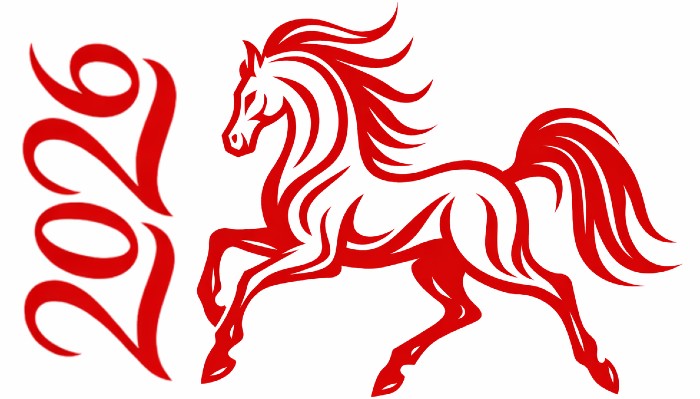
Every year sometime between late January and mid-February, nearly a quarter of the world’s population pauses, cleans house, prepares mountains of food and collectively wishes for better luck. This is Chinese New Year.
In 2026, the Year of the Horse begins on February 17 and runs through March 3, ending with the Lantern Festival.
Despite its English name, Chinese New Year is not just one day. It stretches over 15 days, from the first new moon of the lunar calendar to the full moon that closes the festival with the Lantern Festival. In practical terms, this means celebrations last long enough for families to reunite, fireworks to echo across cities, and waistlines to gently expand.
A festival older than paper money
The origins of Chinese New Year reach back more than 3,000 years to the Shang Dynasty. Early celebrations were tied to agricultural rhythms and involved offerings to gods and ancestors, asking for good harvests and fewer natural disasters. Over time these rituals merged with folklore, etiquette, and a growing number of customs.
One enduring legend tells of Nian, a mythical beast that emerged once a year to terrorise villages. According to the story, people discovered that Nian was scared of loud noises, bright lights, and the colour red. Hence today’s enthusiastic combination of fireworks, lanterns, and crimson decorations. In other words, modern celebrations are partly about warding off an imaginary monster – proof that superstition ages remarkably well.
Today, Chinese New Year triggers the world’s biggest human migration, known as chunyun. Hundreds of millions of people travel home to reunite with family, often enduring long queues and crowded trains. Before the pandemic, this seasonal movement involved nearly three billion individual journeys.
The scale is staggering: more people travel during this period than the entire population of Europe, several times over. It’s a reminder that beneath the fireworks and feasts the festival is ultimately about going home.
The Zodiac: Twelve animals, endless personality tests
At the heart of the festival sits the Chinese zodiac, or Shēngxiāo. It’s a repeating cycle of twelve animals: Rat, Ox, Tiger, Rabbit, Dragon, Snake, Horse, Goat, Monkey, Rooster, Dog, and Pig. Each year is ruled by one of these creatures and each is said to also influence the personality of people born under its sign.
Legend has it that the Jade Emperor held a great race to decide the zodiac order. The clever Rat rode on the Ox’s back and leapt ahead at the last moment, earning first place. The Dragon, capable of flying, came only fifth because it stopped to help villagers by bringing rain. This tale neatly explains both cosmic order and why Rats are supposedly cunning and Dragons generous.
Zodiac signs are used much like horoscopes these days. People consult them for compatibility, career prospects, and even baby-planning. The upcoming Year of the Horse is associated with energy, independence, and restless optimism. Those born under the Horse sign are said to be sociable, quick-thinking and fond of freedom.
What the Year of the Horse means for you
For readers inclined toward superstition the Year of the Horse comes with a ready-made forecast. In traditional astrology, Horse years are linked to momentum, bold decisions, and sudden changes of direction. They are thought to favour people who act quickly, think independently and are willing to take a few calculated risks.
So who’s buying the Bitcoin dip then?
Practically speaking this means the coming year is often described as a good time for career shifts, business ventures, travel, and personal reinvention. It is less ideal for those who prefer stability and routine. Horse energy is said to be impatient with hesitation and tradition warns against overthinking when opportunity knocks.
True believers in the Shēngxiāo will also check the compatibility of Horses with their birth sign. Tigers (born 1962, 1974, 1986, 1998) and Dogs (born 1958, 1970, 1982, 1994, 2006) are considered natural allies, likely to benefit from harmonious horse energy this year.
Rats (born 1960,1972, 1984, 1996, 2008) and Oxen (born 1961, 1973, 1985, 1997) on the other hand could be in for a bumpy ride and should proceed with caution. Only dips you want to be buying are hummus, guacamole and tzatziki.
Even small choices may be influenced by superstition. Favourable colours for Horse years are said to include green and yellow, symbolising growth and balance. Fortunately these are pretty common live dealer table colours across all game types.
Lucky numbers include 2, 3, 7 and combinations thereof. Unlucky numbers are 1, 4, 5 and 9. Bear these in mind when selecting the dates of important events or choosing your roulette bets!
Irrespective of beliefs and plans for the upcoming festive season, Gōngxǐ fācái!






Leave a Reply
Want to join the discussion?Feel free to contribute!