
What are Crash Games and why are they so popular?
So what is a crash game?
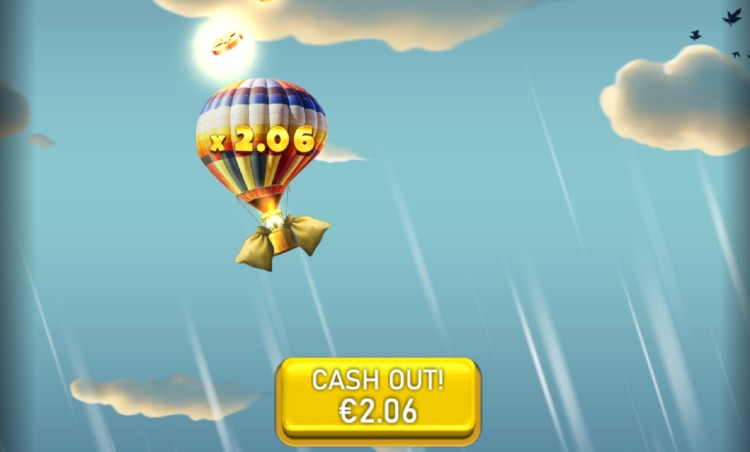
Crash games are a highly popular category of fast-paced online gambling centred on a simple, high-risk premise: players place a bet and watch a visual multiplier (like a graph line, rocket or balloon) continuously increase.
The core challenge is to manually ‘cash out’ before the multiplier randomly ‘crashes’ back to zero. Cashing out before the crash multiplies the bet by the value at the moment of cash out. If you hold on too long and the crash comes before you hit the cash out button, the entire bet is lost.
There are quite a few different crash game formats now, but the the stock standard starts with at a 1× multiplier, rising rapidly from there. The crash can come early (well before 2× is pretty common). Occasionally it comes very late and you rue cashing out at 1.8× as the multiplier sails into 50× range.
Who started the crash game craze?
Bustabit is widely considered the original and most influential crypto-based crash game, first popularising the format in 2015. It was followed soon after by BC.Game’s Crash and Roobet’s Crash, also offered widely at crypto casinos.
The format is now ubiquitous across both crypto and traditional online casinos, consistently ranking among the most-played game types due to its speed, simplicity, potential for large wins, and social elements.
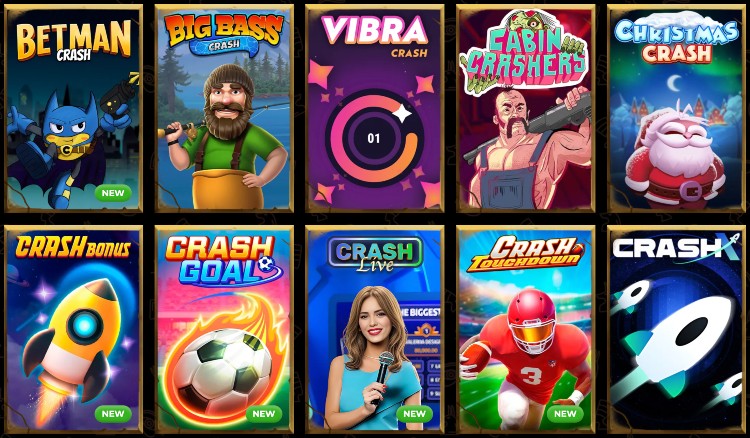
Pretty much every online casino game provider has now jumped on the crash bandwagon and titles are numerous. Batman Crash (Caleta), Big Bass Crash (Pragmatic), Vibra Crash (Vibration Gaming), Cabin Crashers (Quickspin), Christmas Crash (Evoplay), Crash Touchdown (Tada Gaming), Cricket Crash (Onlyplay), Don’t Crash (7777 Gaming), Speed Crash (Hacksaw Gaming) and Golden Skies Crash are just a sample.
Why crash game are so popular?
 Currently, the most dominant titles include Stake.com’s Crash (leveraging its massive user base), BC.Game’s Crash, Roobet Crash, and Aviator by Spribe – which, while visually distinct (featuring an ascending plane), operates on the identical crash mechanic and is arguably the single most popular game in this category globally.
These games are all super simple. They have a very high bet frequency. There’s no doubt they get the pulse rate elevated.
They are also widely marketed as ‘provably fair’ – a claim which may garner some appeal from the crypto fraternity but which critics of these games suggest is misleading.
Provably fair
Crash games, especially in crypto casinos, are often marketed as ‘provably fair’ to build player trust.
This claim centres on cryptographic verification. Before a round, the casino generates a secret ‘server seed’ and shares its hashed fingerprint. Players can often add a ‘client seed.’ The crash point is determined by combining these seeds and a round counter using a verifiable function. After the round, the original server seed is revealed.
Players can (few in practice do) then independently verify that the crash point was both:
- Predetermined: calculated before the round started.
- Random: not manipulated after bets were placed.
Casinos promote this to assure players the game isn’t rigged against them specifically post-bet to addresses fears of operator cheating. However, the claim provably fair has significant limitations.
It only proves the crash point was random and predetermined. It does not mean the game offers fair odds – the house edge (ensuring casino profit) is mathematically built-in. Detractors argue the provably fair claim creates a false sense of security, potentially masking the inherent risk and addictive nature.
Thought of another way, if a game’s outcomes are provably random, yet the game has a return to player rate of 94% – is the game really fair?
Authorities like the UK Gambling Commission (UKGC) have made their concerns about crash games clear. In addition to the false sense of security that provably fair marketing can bring they highlight a raft of other issues that operators need to be mindful of when offering these games. These include extreme addiction risks stemming from the very rapid play cycle (games can conclude in seconds), the powerful psychological impact of near misses (cashing out just before a crash), the false illusion of control over predicting crashes, and the intense, volatile win/loss cycle. These concerns have led to warnings to operators and outright restrictions or bans in some jurisdictions.
Live dealer crash games – Crash Live
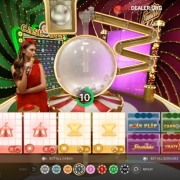
Guess we shouldn’t be surprises to see live games provider throw their hat into the crash games ring. Some time ago Evolution introduces us to Cash or Crash Live, which brought an element of physical randomness to the crash game concept.
Simpler still, is the more recently introduced Crash Live from Iconic21. It’s a basic crash game with a simply line graphic depicting the rise of the multiplier.
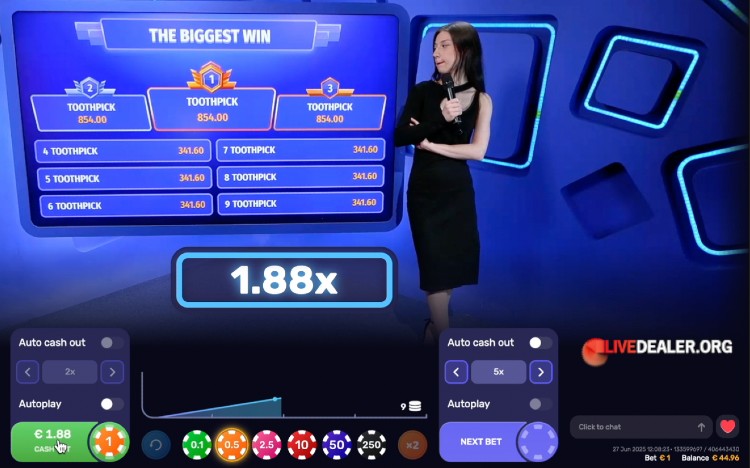
Results are entirely RNG generated. The only ‘live’ part about it is a presenter calling the action in real time.
Like the other crash game titles we played this one gets the pulse racing, playing beautifully to your inner greed versus fear emotions. But beware, its RTP is a lowly 96%.








Leave a Reply
Want to join the discussion?Feel free to contribute!