
Online Gambling in Russia
Background
Since the collapse of communism and the Soviet Union in the early 1990’s, Russia has seen an exponential expansion in terrestrial casinos and gambling activity. Blamed for growing incidences of problem gambling, as well as providing a haven for criminal gangs and money laundering activity, the industry received a shake-up in 2006 when President Vladimir Putin introduced a law that would outlaw all casinos and gambling (including online gambling) outside four designate zones – the Baltic exclave of Kaliningrad, the Altai region in Siberia, Primoriye in the Far East and around the Sea of Azov in southern Krasnodar.
Federal Law No. 244-FZ ‘On State Regulation of Activities for the Organisation and Conduct of Gambling‘ (the Federal Law) was enacted on December 29 2006 and came into effect on July 1 2009. It saw the many casinos and gambling houses in Moscow and other cities outside the designated casino friendly zones forced to shut up shop. It had been hoped that in the wake of the global financial crisis, authorities would relax their stance on the law’s enforcement to preserve the estimated 400,000 Russians employed in the industry.
However, over time the government began to recognise the potential for revenue generation from this sector, leading to a gradual relaxation of regulations. In 2014, amendments were made to the Federal Law which allowed for the legalisation of online sports betting. However, other forms of online gambling, such as casino games and poker, remain illegal.
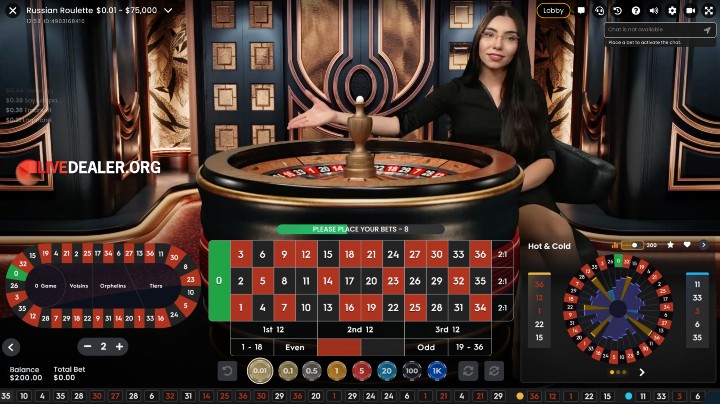
Russian Roulette with croupier chat in Russian. Powered by Pragmatic Play, offered @ Stake
Current Regulations
- Legal Framework
The primary legislation governing online gambling in Russia is the Federal Law. This law has undergone several amendments to adapt to the evolving gambling landscape, particularly with respect to online sports betting. - Licensing
To operate legally, online sports betting companies must obtain a license from the Federal Tax Service (FTS). The licensing process involves rigorous scrutiny of the applicant’s financial stability, corporate structure, and compliance with various operational standards. Operators must also establish a local legal entity in Russia and pay significant licensing fees. - TSUPIS (Center for Accounting of Interactive Bets)
A key component of the regulatory framework is the requirement for all financial transactions to be processed through the centralised payment system, TSUPIS. This system was created to ensure transparency and control over betting activities. - Enforcement activity
The government seeks to actively enforce regulations through measure like requiring ISPs to block access to unlicensed gambling websites, and financial institutions to block transactions with these sites.
Major Operators
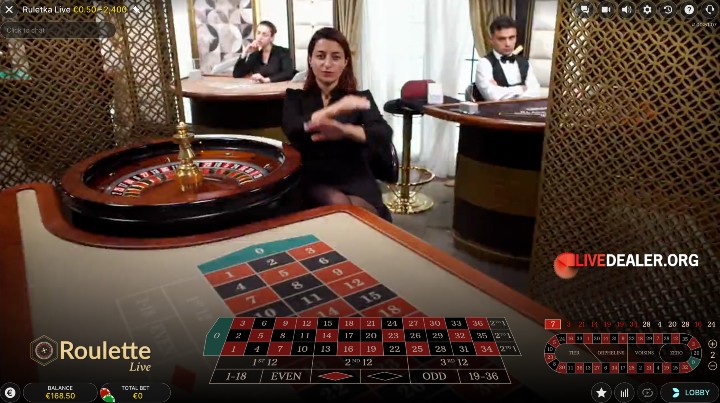
Evolution’s Russian Ruletka table with Russian dealers, as played at 888
The major operators in the Russian online gambling market are primarily state-affiliated or heavily regulated private companies with intrinsic state connections. Key players include:
- Fonbet: One of the largest and oldest bookmakers in Russia, offering a wide range of sports betting options.
- Liga Stavok: A prominent bookmaker known for its extensive sports betting platform and sponsorship deals with sports leagues.
- 1xStavka: A popular betting platform that operates under the 1xBet brand, offering numerous sports betting markets.
None of these operators offer live dealer casino games.
Best live casino for Russian players
Russian players are well catered for by international live casino operators, with localised games with dealers chatting in Russian.