
Online gambling in Thailand
Background
Like governments of most South East Asian countries, the Thai government does its best to keep gambling a largely State controlled concern. Thai residents may participate in the government owned lottery which is drawn on the 5th and 30th of each month, or wager on Royal Turf Club races in Bangkok…again a government controlled affair.
Casinos are banned in Thailand and players wishing to play at terrestrial casinos must travel to neighbouring Laos or Cambodia who have cheekily set up casinos near the Thai border to satisfy Thai resident’s thirst for card and dice games. They can of course also make the trek to other parts of Asia permitting casinos, like Macau and Singapore.
While laws related specifically to online gambling do not exist, it is clear that Thai authorities take a dim view of the industry. In May 2009 the Information and Communications Technology Ministry, under instructions from a Thai court, ordered ISP’s in Thailand to block resident access to 72 identified gaming and gambling websites. While commentators argued the order’s questionable basis in Thai law, it signalled authorities’ clear reservations about online casinos and sports books playing any part in the Thai gambling landscape. A reservation that remains to this day.
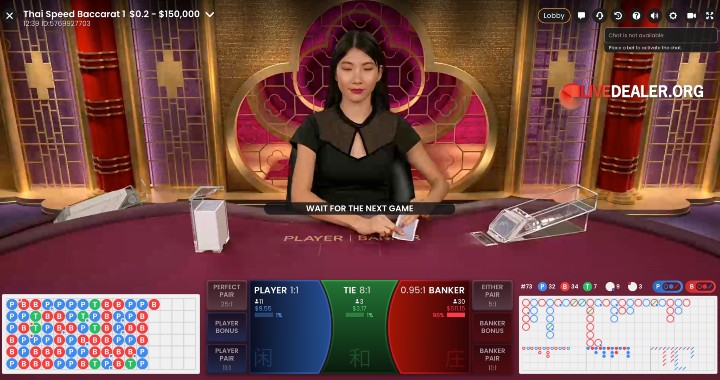
Thai Speed Baccarat with dealer chat in Thai
Regardless, live dealer tables tailored to the Thai playing market are offered by major international operators.
Current Regulations
Thailand does not have specific legislation that specifically addresses online gambling. Instead, the country’s existing laws governing gambling activities are applied to the online domain. The primary legislative framework includes:
- Gambling Act of 1935: This act is the cornerstone of Thailand’s gambling regulations. It broadly prohibits most forms of gambling, including online gambling. While the act does not explicitly mention online gambling (as it predates the internet), its provisions have been interpreted to include digital platforms. The Act outlines penalties for both operators and participants involved in unauthorised gambling activities.
- Anti-Money Laundering Act: This act is used to combat illegal financial transactions, including those related to online gambling. It enables authorities to monitor and disrupt the financial activities of illegal gambling operations.
Thai authorities extend enforcement measures under these of these laws to online gambling activities. The government collaborates with ISPs to block access to unauthorised online gambling websites and regularly prosecute groups involved in running illegal online gambling operations within Thailand.
Curiously, many international operators treat Thailand as a grey market, happily welcoming Thai players.