
Online gambling in Indonesia
Background
The online gambling market in Indonesia has a relatively short history, primarily due to the country’s strict stance on gambling. Traditional forms of gambling were prevalent in the past, but the government has increasingly cracked down on these activities over the years.
With the rise of the internet in the late 1990s and early 2000s, online gambling began to emerge. However, due to the country’s strong legal and cultural opposition to gambling, the market has largely operated underground or through offshore platforms.
Current Regulations
Indonesia has some of the strictest gambling laws in the world. Under the Criminal Code and the 2012 Law on Information and Electronic Transactions (ITE Law), all forms of gambling, including online gambling, are illegal.
The government seeks to actively block access to online gambling websites and imposes severe penalties on those caught facilitating such activities. Enforcement includes frequent internet sweeps and collaborations with international agencies to curb illegal online gambling.
Enforcement efforts stepped up in 2024 following a decree signed in June by President Joko Widodo to establish a task force dedicated to eradicating online gambling. In August 2024 warning letters were sent to digital payment service providers from the Ministry of Communication and Information Technology. The letters had been prompted by evidence that digital payment providers are facilitating gambling transactions.
Major Operators
Despite the legal prohibitions, a number of offshore operators accept Indonesian players. These operators often provide services in the Indonesian language and accept local currency to attract users.
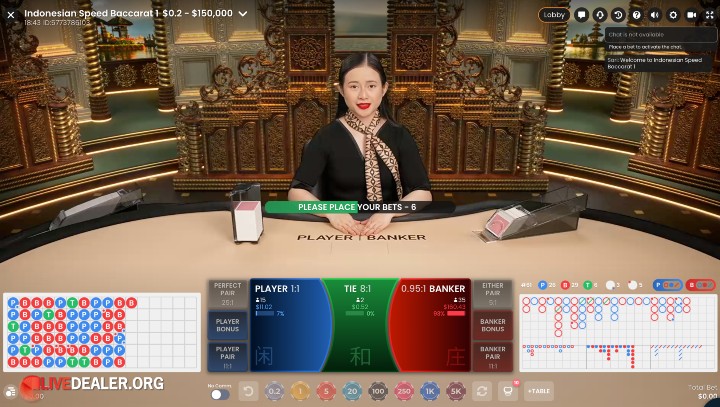
Indonesian Speed Baccarat table with dealer chat in Indonesian @ Stake
Popular international gambling websites, such as Bet365 and 188Bet, operate in a grey area by offering their services to Indonesian players while being based in jurisdictions where online gambling is legal.
Local enforcement efforts continue to battle these offshore entities, but they remain accessible to many Indonesian players through the use of virtual private networks (VPNs) and other circumvention tools and crypto-currency deposit and withdrawal options.